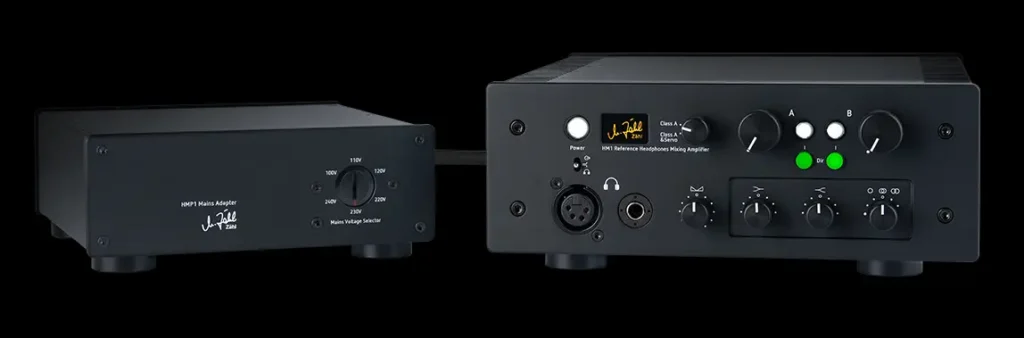
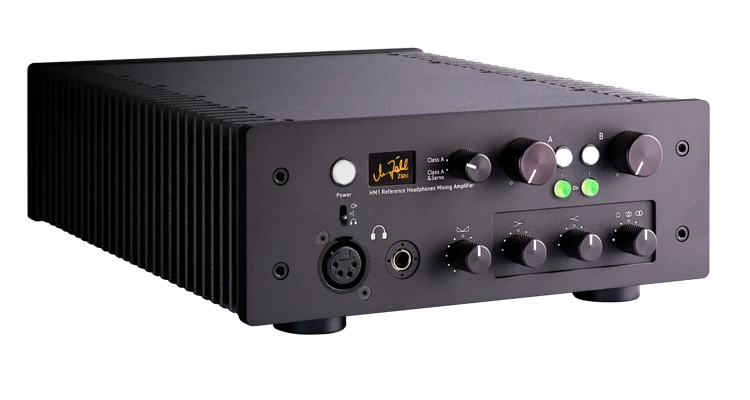

Zaehl HM1 Reference Headphones Mixing Amplifier

Zaehl HM1 Reference Headphones Mixing Amplifier

Product code:
HM1 Reference
Available on demonstration in store
Availability In Stock
Guaranteed In Stock
Special Order Item
5-year-warranty
Trade in product
Book a Demonstration
Available to collect immediately

£8,449

Trade In

Want to Trade In? Get in Touch.

Demonstration

Request a demo for

Zaehl HM1 Reference Headphones Mixing Amplifier

Features

  • perfect impulse reproduction
  • ultra wide frequency response
  • extremely low impedance output precisely controls complex loads
  • pure analogue design
  • consistent dual-mono layout
  • logic circuits without clock generators
  • straight linear power supply with power transformer in external housing
  • no-compromise selection of components
  • no-compromise interior and exterior construction
Specifications

Category

Specification

Line Inputs (Balanced)

Impedance: 20 kΩ

Maximum Level: +23 dBu

Line Outputs (Balanced)

Impedance: 47 Ω

Maximum Level: +23 dBu

Transformer-like behavior: Hot or cold may be connected to ground without loss

Line Inputs (Unbalanced)

Impedance: 20 kΩ

Headphones Output

Output Impedance: Class A – 0.8 Ω

Class A & Servo – 0.045 Ω

Maximum Level: +23.5 dBu (±16.5 V)

Output Power (per channel)

RMS: 4 W @ 30 Ω; 7 W @ 15 Ω

Peak: 7.6 W @ 30 Ω; 11 W @ 15 Ω

12 W @ 10 Ω (18 W for 1.5 ms)

Frequency Response

10 Hz – 30 kHz (±0.05 dB)

1 Hz – 500 kHz (better than –3 dB)

Headphones Output @ +6 dBu

Gain

Line → Line: 0 dB / +15 dB (rear-panel switchable)

Line → Headphones: +6 dB / +15 dB (rear-panel switchable)

Noise (20 Hz – 20 kHz)

XLR / RCA Output: –102 dBu

Headphones Output: –97 dBu

THD (Headphones Output)

Class A: 0.07 %

Class A & Servo: 0.0005 %

(Typical @ +20 dBu / 7.75 V RMS / 30 Ω load / 2 W RMS)

Power Supply

AC 50–60 Hz

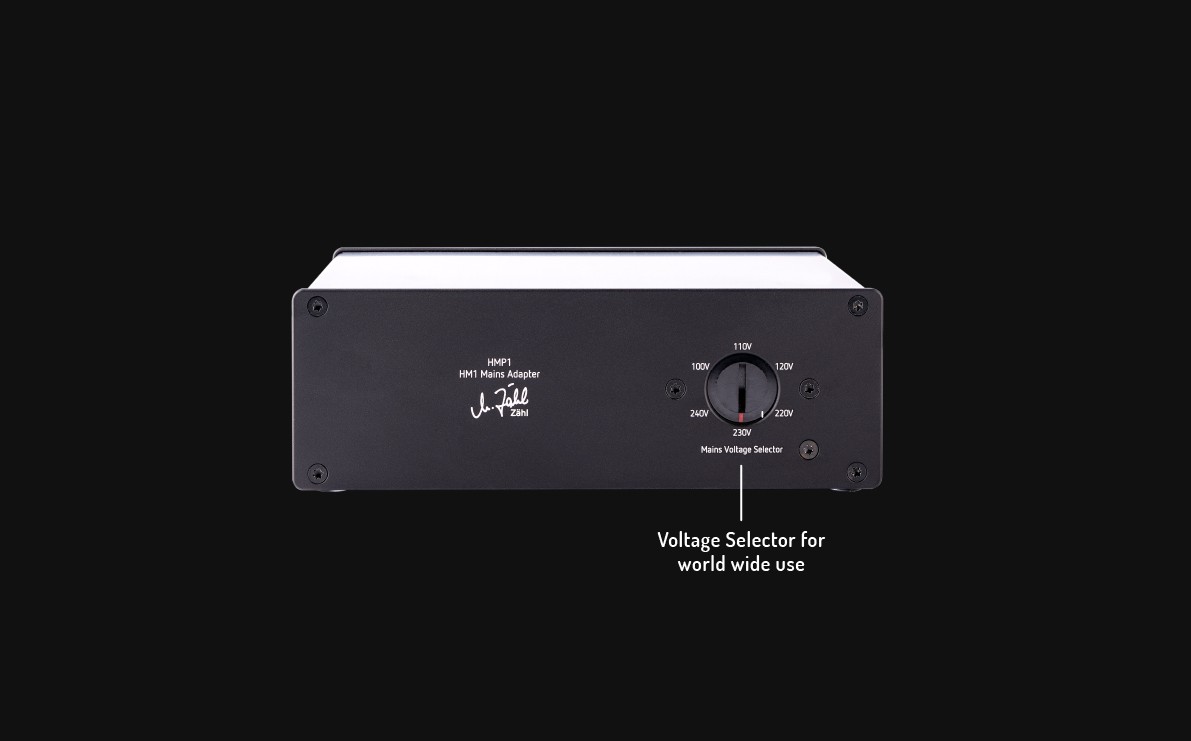
Switchable: 100 / 110 / 120 / 220 / 230 / 240 V

Power Consumption: Typical 40 W, Max. 60 W

Dimensions & Weight (HM1)

225 × 90 × 300 mm (W × H × D)

Approx. 5 kg

Dimensions & Weight (HMP1 – Mains Adapter)

170 × 60 × 185 mm (W × H × D)

Approx. 1.2 kg

Description

Reference Amplifier

Reference Amplifier with unprecedented transparency and precision, attention to detail and massive power performance. Rich feature set for both high-end enthusiasts and professional users. Designed and manufactured in Germany


Special Features


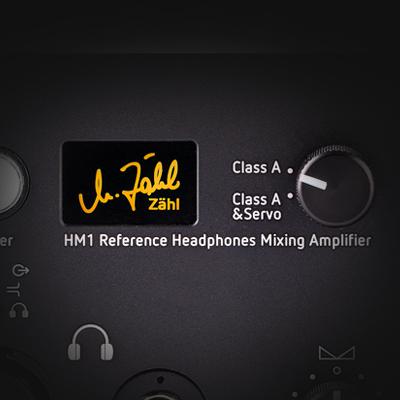
Unique: Class A power and a step beyond

  • Class A power amplifier in its purest form
  • switchable negative feedback (“servo”) while maintaining Class A operation

Cross fade, compare or mix two stereo sources

  • create a mix from two audio sources
  • Cross-fade or switch between two stereo sources (channel A /channel B)
  • perform a precise, critical A/B comparison with independent volume compensation

Sound adjustment and stereo base control

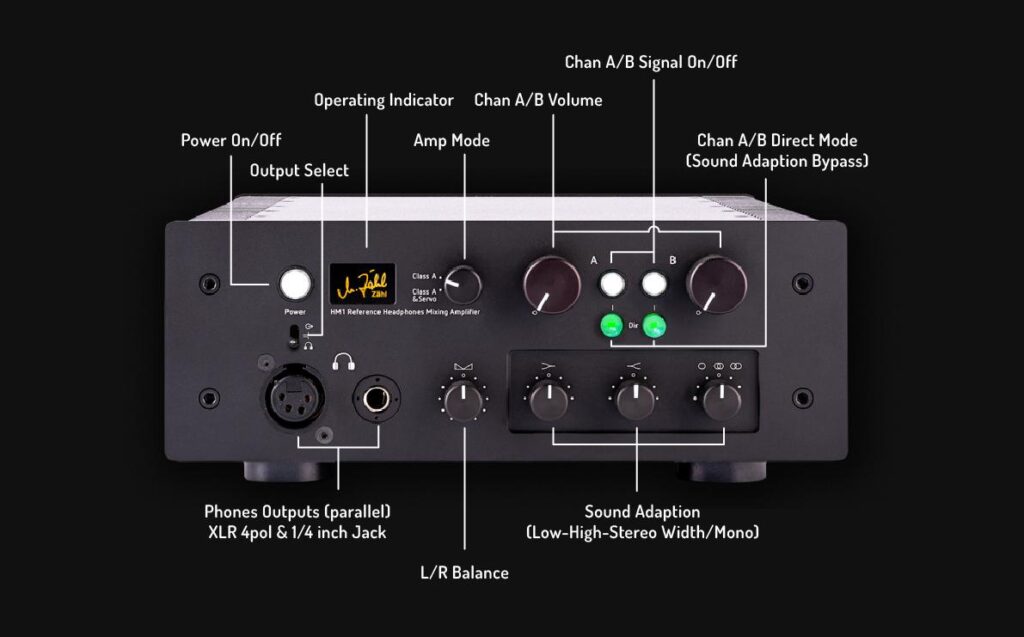
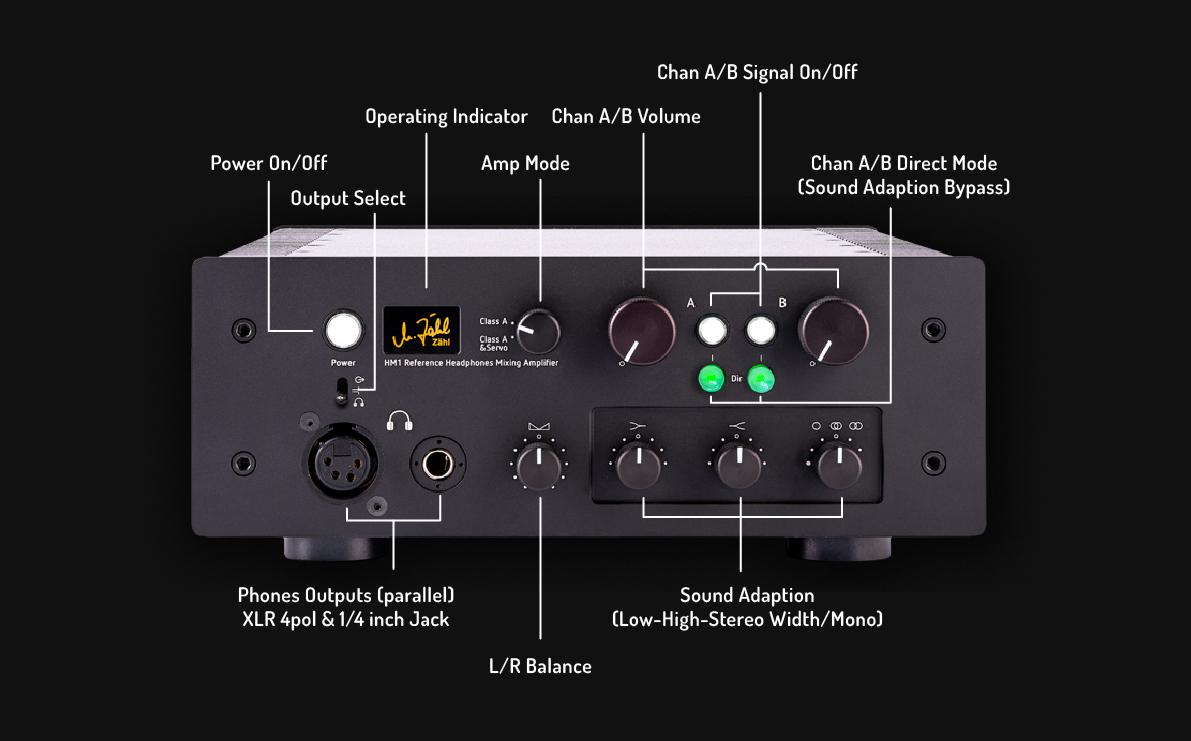
Precise, finely tuned tools for sound adjustment. Stereo base control for adjusting the stereo image (spatiality).


POWER STAGE

Class A – HM1 realisation

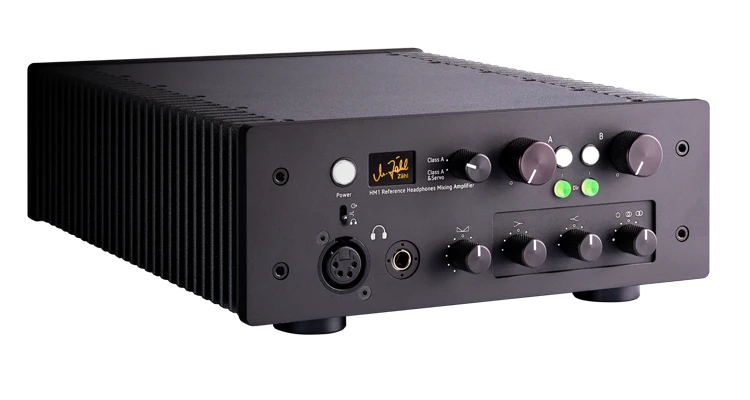
The HM1 power stage provides massive power reserves, which is already evident from the fact that it consumes almost 40W in idle mode. The output power is more than sufficient for any application, and in the millisecond range it is increased substantially. The output resistance is remarkably low. The optimum operating point of the power stage was first specified by theory, then by measurements on the sample units and finally fine-tuned during numerous listening tests with experts, especially mastering engineers. The same applies to the selection of components. This meticulous way of design largely compensates for the possible disadvantages of Class A described in the theory paragraph below.


Class A & Servo – HM1 realization

To take Class A one step further, we implement an idea which is as simple as it is ingenious: We take the best of Class A and the best of negative feedback amplifiers and put it together: Class A operation is supplemented by negative feedback (“Servo”). Since there is no crossover distortion, there is nothing for the feedback circuitry to correct. Rather, it only corrects the errors which result from the interaction between the power amplifier and the headphones. The feedback path is designed in such a way that no artifacts are created by the correction. The output resistance drops to a value which is smaller than the sum of headphones cables and connectors. In this way, headphone systems can be controlled precisely. One can say that with the HM1, any headphones sound as they should.

Why Class A and Class A & Servo?

The previous paragraph may lead to the conclusion that the optimum is achieved with Class A & Servo operation. So why do we still have the switching option? Quite simply because we judge our circuits by ear. Our Class A amplifier was developed with the highest musical demands in mind. We experienced that it does not sound the same as the servo version, but it sounds equally outstanding. Depending on headphones, music and personal preference, the user can make their choice. We were surprised to find that despite clearly different characteristics and measurement results, the hearing difference is rather subtle.


Stereo Base contro

A/B comparison

CConcerning the reference quality of the HM1, the idea of ​​using it for critical A/B comparisons is most obvious – be it for evaluating different sources like D/A converters or cartridge systems in the high-end range or comparing different mixes or sound processing options in the professional range.

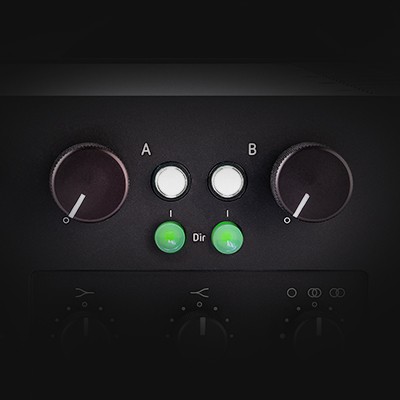
For this purpose, the HM1 has two inputs with independent level control and on/off buttons. Exact level matching is essential for a critical A/B listening comparison. By the way, the on/off function can also be operated via a cable remote control, which facilitates a blind comparison.

Mixing two sources

And of course this stage is suitable for mixing any two sources. A new program is created from two music programs. This new program can then not only be listened to in the headphones but is also available at the line outputs on the back of the unit, which can be used for connecting active speakers and recording units. This turns the HM1 into a 2-channel stereo mixing console with reference quality.

Also important: If only one channel is used, the mixing stage is not superfluous “ballast”. An unused channel is switched off directly at the input stage and thus cannot negatively influence the signal integrity. This switch-off is realized via relays and is triggered as soon as a volume control is set to minimum or a channel on/off button is in the off position.with this function and may discover possible problems, especially in the extreme positions.

Cross-fade

The mixing stage can also be used to crossfade two sources. A very musical alternative to the otherwise usual “hard” switching.


SOUND ADJUSTMENT

This stage is not designed to massively affect the sound. As a rule, all audio gear connected to the HM1 is of extremely high quality, a classic tone control would not be appropriate.

However, it can be advantageous to make fine, precise adjustments in the frequency response domain, depending on the headphones, music program or even personal preference.


Low and high frequency adjustment

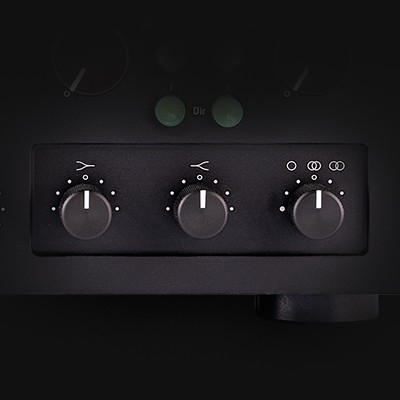
The low and high frequency adjustment, each in three fixed steps as boost and cut, is primarily designed for musical purposes. We have further developed proven circuits from studio technology to achieve a stage which sets subtle accents rather than changes the sound character. The basis are filters with selected components, of course all circuits are precisely switched by relays.

Professionals use the functionality, for example, to find out whether a mix is ​​balanced in terms of low and high frequencies or can still be optimized.

Stereo base control, a little theory

A special feature is the possibility to adjust the stereo width. The perception of spatiality when listening with headphones differs from listening with loudspeakers. Instead of a cross-feed circuit, we use our stereo base width setting. It is based on the mid/side technique which is commonly used in professional studios. It provides additional benefits.

The stereo signal is converted into a mid signal (in simple terms, what L and R have in common) and a side signal (in simple terms, what distinguishes L and R). Summing mid and side signals in a 1:1 ratio will result in the original stereo signal. However, if you change the ratio between mid and side before summing them, you change the stereo base width. In our circuit, we leave the mid signal as it is. We only adjust the level of the side signal. If we lower the level, the stereo image becomes narrower, if we raise the level, the stereo image becomes wider.


Stereo base control, what it does

You have direct access to the perception of spatiality. With a music program which seems too “wide” in the headphones, one will turn the control one or two steps to the left. If you perceive a recording as too “dry” (centered), turn the control one or two steps to the right. The leftmost position is mono. This is the preferred setting for early stereo recordings, when individual instruments have been mixed to the extreme left or right – without spatial reference.

Professional users check the spatiality of their mix with this function and may discover possible problems, especially in the extreme positions.

Also important: With the DIR (Direct) button, this stage can be completely switched out of the signal path. In this way, the purist approach is taken into account.


BALANCE

A precision potentiometer with 21 detents is available for balance control. The center position is perfectly calibrated and haptically clearly defined. In fine increments, left/right volume differences of up to about 2.5 dB – caused by music programs, headphones or individual perception – can be compensated.


Headphones Outputs / Balanced Connection

XLR 4-pin, Pentaconn and ¼ inch jack connectors are wired in parallel and are intended for alternative use. Theoretically, you could use them at the same time, as the power amplifier is strong enough. However, for a reference-quality listening experience, we do not recommend such use.

Ideally, XLR 4-pin and Pentaconn are used in conjunction with balanced wired headphones. In this case, the signal currents of the two power amplifiers are not mixed with each other, so mutual interference is impossible. The HM1 can unfold its full quality (also refer to the chapter “Dual Mono Design”).


Dual Mono vs. Balanced amplifier design

With its dual mono design, the HM1 features the same advantages as a balanced output stage but avoids the drawbacks.

The drawbacks of a balanced output stage are the significantly increased number of electronic components – a balanced output contains two output stages per channel, which work in reverse phase. Two output stages result in doubling the output impedance. More components result in an increased risk of non-linearities.

¼ inch jack compatible

Another advantage of the HM1 architecture is that unbalanced headphones with ¼ inch jack plugs can also be operated without any problems.


LINE INPUTS

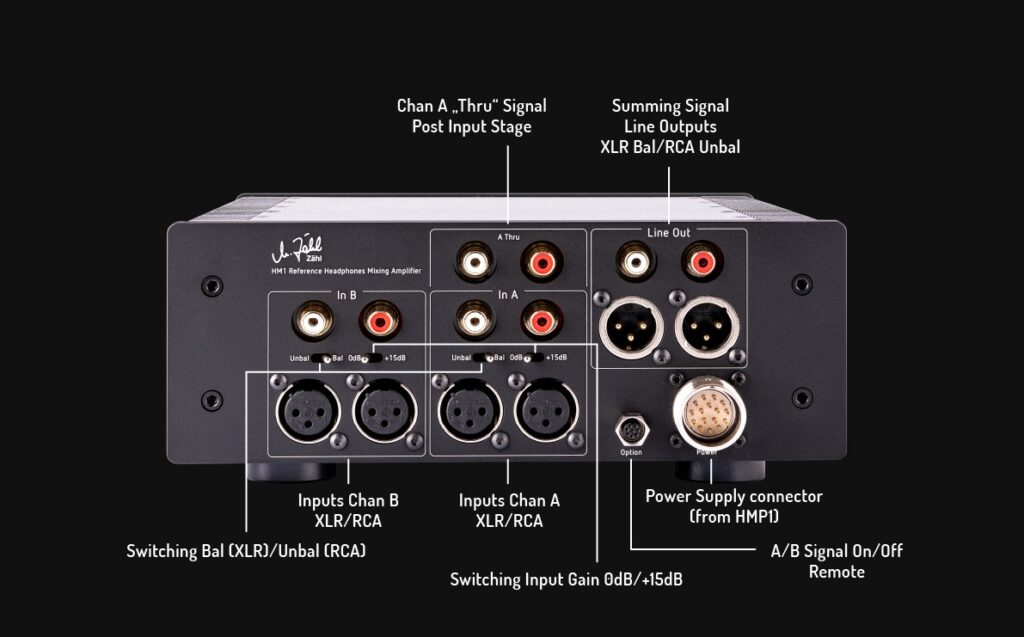
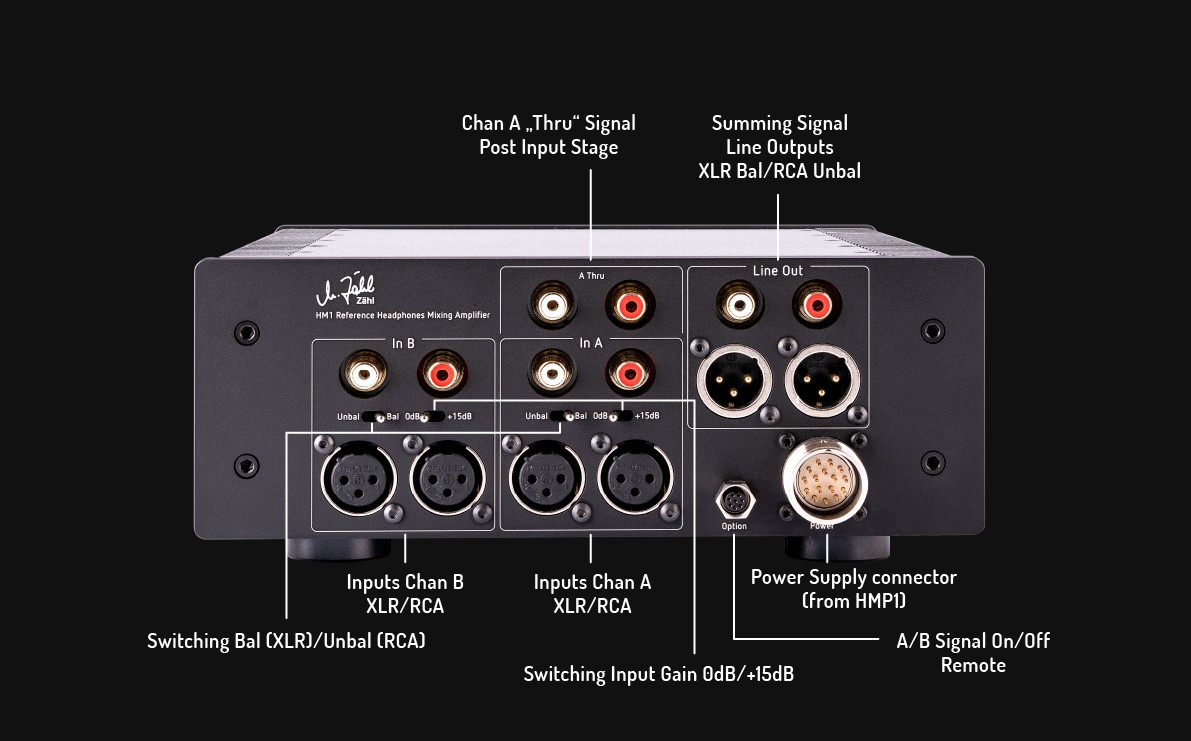
Balanced signals (XLR) or unbalanced signals (RCA) can be connected to Line Input A and Line Input B. XLR and RCA must not be used simultaneously on the same input. The Bal/Unbal switches set the inputs independently to balanced (Bal) or unbalanced (Unbal) mode.

Each input provides another switch which adds an extra 15dB gain. This ensures that even signals with low levels can be processed without any problems.


LINE OUTPUTS

The signal at the line outputs corresponds to the signal in the headphones, except that it does not pass through the headphones amplifier, but through balanced or unbalanced line output stages and is routed to connectors on the rear.

Connect active speakers, power amps or other gear

Balanced and unbalanced outputs may be used simultaneously to drive power amplifiers, active speakers, level meters or other components. If, for example, the HM1 is used for comparing two stereo sources, the result may be recorded using one of the outputs. The same applies when using the HM1 as a mixing console.

“A THRU” OUTPUT

The “A Thru” signal is tapped from Input channel A, post input amplifier. The switchable 15dB gain stage at Input A affects the “Thru” signal. The Thru output has an unbalanced output stage.

Setup your own test bench / experimental bench

A signal connected to Input A can thus be routed to another application without loss. Application example: “A Thru” is routed to a sound processing device or effects unit, the output of this unit is fed to Line Input B. The ratio between original and processed signal can be set by the A/B volume controls. Of course, this setup is also excellent for testing any device: Channel A supplies the original, channel B the signal coming from the unit to be tested.


DUAL MONO DESIGN

The idea

The idea behind strictly separating left and right channels is to keep any interference away from the circuits. A term like “crosstalk” does not get to the core of the matter. Music signals usually have left/right references, so that an extremely low crosstalk value, moreover, usually measured with sine waves, does not mean so much. But with music, highly energetic signal pulses occur, and then high currents are individually demanded by the output stages. It is extremely important that in these cases there is no coupling via a common power supply or via ground lines carrying signal current. Only this way can an amplifier produce absolutely undistorted output signals.

Realisation inside the H1

In the HM1, the power supplies for the left and right channels are separate, for preamplifiers and power amplifiers. The mains transformer has independent, completely potential-separated windings for each channel. Rectification, filtering and voltage regulation for each channel are individual. For logic circuitry and front-panel indicators, there is another winding and separate rectification, filtering and voltage regulation.

The ground potentials of the two channels are connected at one point only, but this is done purely as potential equalisation; signal currents can’t be mixed.


Optimal output connection

If the XLR 4-pin or the Pentaconn output is used in combination with balanced wired headphones, the dual mono principle is implemented in full consequence.

When using the jack output, the ground wires of both channels are connected in the jack socket and the jack plug of the headphones. The use of headphones with jack plugs, therefore, is not ideal. In the HM1, however, an optimised ground routing ensures that the disadvantageous effects are as low as possible.


POWER SUPPLY

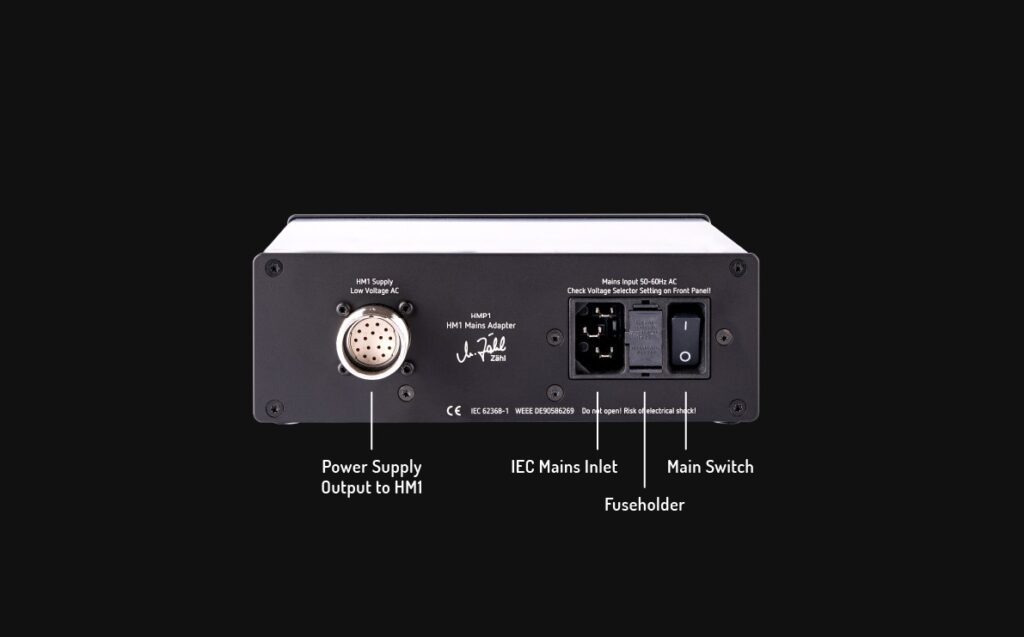
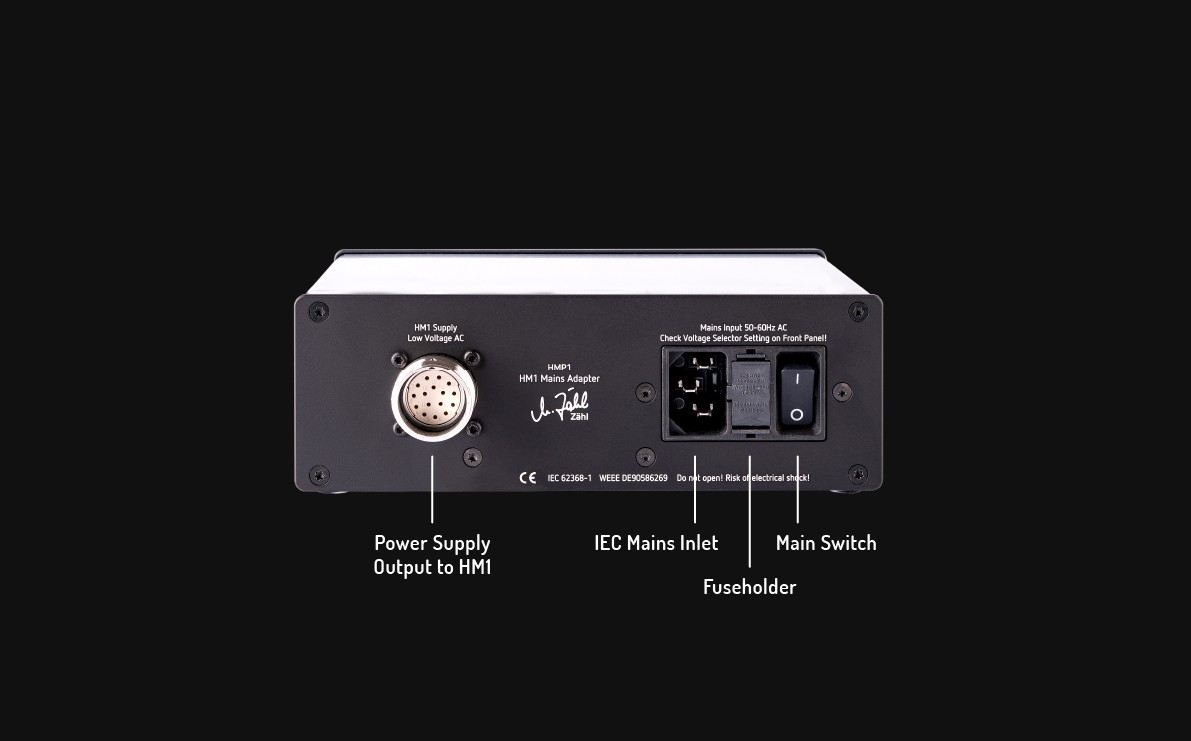
Mains voltage and mains transformers are always potential sources of interference – consequently, we have outsourced them to the HMP1 mains adapter.

The mains adapter also contains a standby power supply unit which delivers a stabilized low voltage. This voltage is applied to the Power switch on the front panel of the HM1 and serves to switch on the actual mains transformer via a relay.

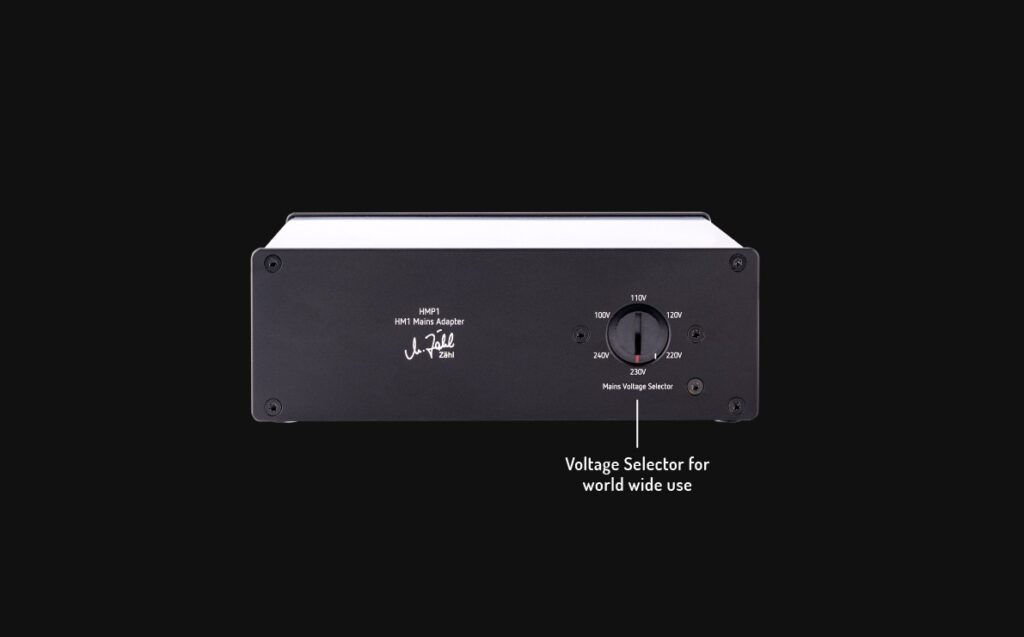
Worldwide operation

The standby power supply has a wide-range input, is a purely linear design and complies with the common standby power regulations.

The mains input is equipped with one of the best interference filters available and can be set for operation on the following voltages: 100V-110V-120V-220V-230V-240V.

The mains switch on the back of the HMP1 can be used to completely de-energize the unit.

Variable cable length

The connecting cable between the mains adapter and the main unit carries potential-separated low voltages only. The length of the cable is variable over a wide range and can be defined by the user when ordering.


Application Examples

Conventional

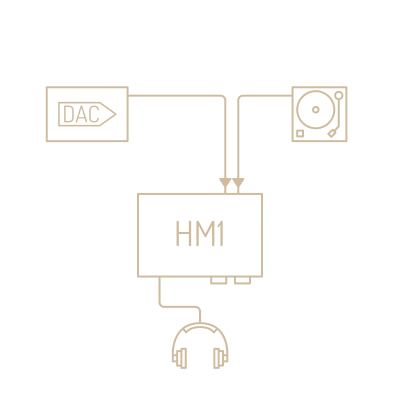
Example for a conventional setup as headphones amplifier: Your reference DAC at Input A and an analogue source at Input B

Preamplifier in minimalist system

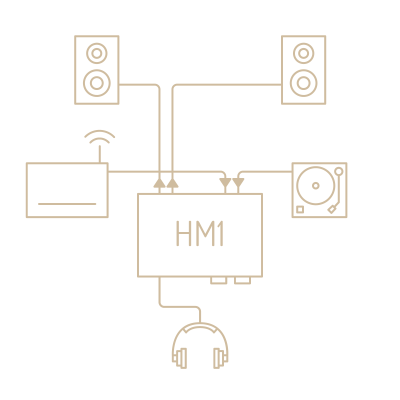
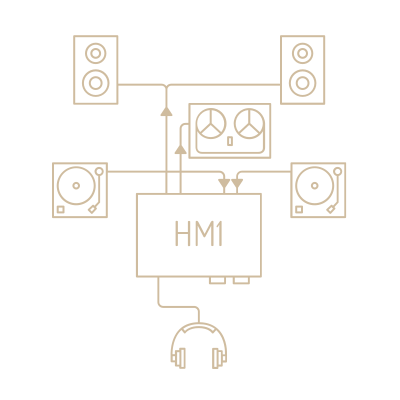
By connecting power amplifiers or active speakers to the Line Out outputs, the HM1 can be used as a preamplifier. Example of a minimalist setup: Streamer to HM1 Input A, turntable (with built-in or external RIAA amplifier) ​​to Input B, active speakers to Line Out.

Preamplifier in minimalist system

Precision comparison

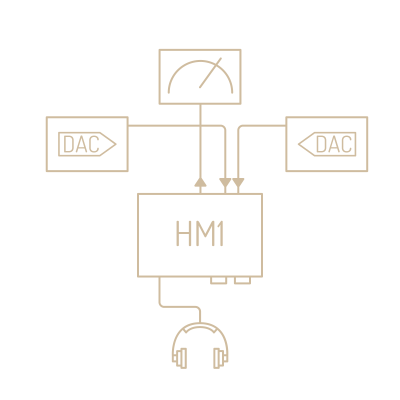
Two sources connected to Inputs A and B, precision level meter connected to Line output. Source levels can be exactly matched using the level meter and the volume controls. Then sources are alternately activated by the Chan on/off switches.

2-channel mixing console

As a mixer, the HM1 can merge any two sources at Inputs A and B to create a new music program – or simply cross-fade from one source to the other. The mix is ​​present at the line out outputs and may be fed to an audio recording device.

Effect/Test

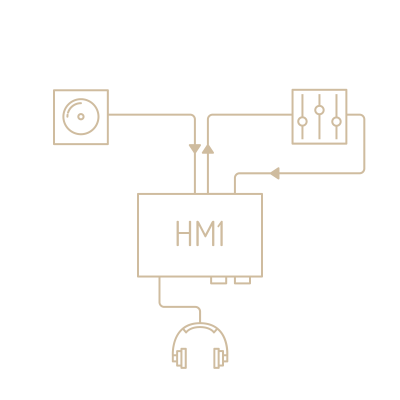
By using the “A Thru” output, a sound processing or effect device can be “looped in”. It is fed from “A Thru” and its output is applied to Input B. The ratio between original and effect unit is set at the A/B volume controls. Instead of the effect, any device to be tested can be looped in. The listening comparison is then made by carefully matching the volume controls and then pressing the A/B on/off switches.

2-channel mixing console
Effect/Test

Warranty

Backed with a 5- Year Manufacturer Warranty

Delivery Info

dpd-logo

Delivery Information

As a company our primary goal is to provide a seamless service that results in customer satisfaction. We aim to deliver within 3 working days. Unfortunately, there may be occasions where this time frame may not be met due to unforeseen circumstances; in this instance, we deliver product/s as soon as we can. All delivery charges are included within the prices quoted, unless otherwise specified.

All small items are usually delivered between 9am and 6pm, on a Monday to Friday, unless a Saturday delivery is requested. Follow My Parcel is an industry-changing innovation from DPD Local, which will give your customers unparalleled levels of information and peace of mind.Not only will your customers receive a one hour delivery timeslot, but they’ll now also be able to track the progress of their parcels on a map as our drivers make their way to the delivery addresses. Follow My Parcel will:

Back to Top

Search For Products

Product has been added to your cart
Compare (0)